English
 Français
718.00 CHF 797.00 CHF

Estate signature
In Châteauneuf-du-Pape, Château de Beaucastel stands as one of the most emblematic signatures of the southern Rhône Valley. Owned by the Perrin family since 1909, the estate crafts profound, complex and age-worthy wines, admired for their balance, aromatic richness and faithful expression of the great galets roulés terroirs.
France • Rhône Valley • Châteauneuf-du-Pape • Château de Beaucastel • Perrin Family
Château de Beaucastel — The Living Monument of Châteauneuf-du-Pape
Located in Courthézon, in the northern part of Châteauneuf-du-Pape, Château de Beaucastel is one of the most emblematic estates of the southern Rhône Valley. Owned by the Perrin family since 1909, it embodies a demanding vision of wine, based on respect for terroir, biodiversity and the mastery of great blends.
Renowned for the depth, complexity and longevity of its wines, Beaucastel is a major reference for lovers of fine Châteauneuf-du-Pape. The estate cultivates the traditional grape varieties of the appellation and produces ample, structured and deeply Rhône wines, always guided by a search for balance.
The spirit of the estate
A legend of Châteauneuf-du-Pape, where southern power is expressed with restraint, texture and depth. Château de Beaucastel combines living viticulture, a precise reading of galets roulés and the art of blending to produce complex, noble wines built for long ageing.
Terroir: the imprint of galets roulés
The estate covers around 120 hectares of vines, planted on a mosaic of soils typical of Châteauneuf-du-Pape: galets roulés, sand, clay and gravel. These rounded stones store heat during the day and release it slowly, encouraging full ripening of the grapes.
Beaucastel cultivates the 13 traditional grape varieties of the appellation, with an important place given to Grenache, Mourvèdre, Syrah and Counoise, as well as white varieties such as Roussanne and Clairette. This vegetal and geological diversity gives the wines their breadth, complexity and remarkable capacity to evolve.
Terroir expression: Châteauneuf-du-Pape, galets roulés, sand, clay, gravel, Grenache, Mourvèdre, Syrah, Counoise, garrigue, spices, leather and saline finish.
Beaucastel signature: depth, biodiversity, precise blending, restrained power, silky texture and great longevity.
Viticulture and biodiversity
A pioneer of organic farming in the Rhône Valley, the estate has long followed an approach rooted in respect for the living world. Natural grass cover, hand harvesting, integrated pest management and the absence of synthetic chemical products all contribute to the balance of the vineyard.
This philosophy aims to preserve soil vitality and the individual expression of each grape variety. It allows Beaucastel to build wines that are powerful yet nuanced, combining southern richness, natural freshness and great precision in the final blend.
Vinification and ageing
Each grape variety is vinified separately, in large concrete or steel vats, in order to preserve its identity before the final blending. Macerations are long and extractions progressive, seeking structure, finesse and balance.
Harvest: manual, with careful grape selection.
Vinification: each grape variety vinified separately, in concrete or steel vats.
Blending: carried out after fermentation, seeking complementarity, structure and harmony.
Ageing: 12 to 18 months in old foudres or demi-muids.
Style of the wines
The wines of Château de Beaucastel are distinguished by their depth, complexity and ability to age with nobility. The reds combine ripe fruit, garrigue, leather, spices and the noble character of Mourvèdre, with ample structure and silky tannins.
The whites, especially those built around Roussanne, offer body, freshness and length. In both colours, the Beaucastel style rests on texture, balance and a profoundly Rhône identity.
Aromatic profile
Reds: morello cherry, dark fruit, plum, leather, garrigue, pepper, liquorice and smoky notes.
Whites: white flowers, lemon, peach, apricot, fine honey, stone fruit and saline notes.
Evolution: truffle, noble undergrowth, dried herbs, fine leather, melted spices and long finish.
Emblematic cuvées
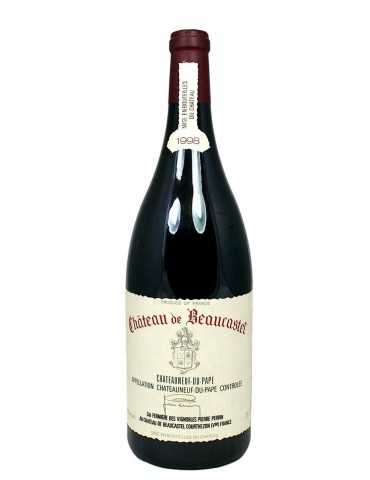
Château de Beaucastel Rouge: the estate’s signature cuvée, deep and complex, with aromas of morello cherry, leather, garrigue and Mediterranean spices, a dense palate, silky tannins and a long finish.
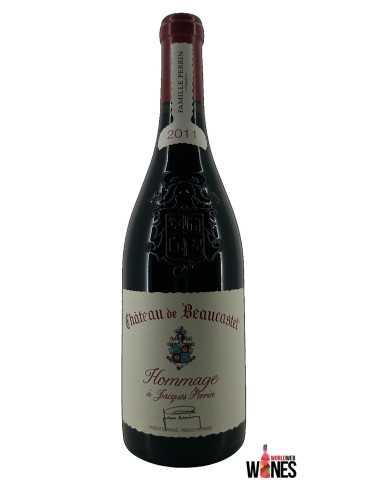
Hommage à Jacques Perrin: a prestige cuvée from old Mourvèdre vines, produced only in great years; concentrated, distinguished and endowed with exceptional ageing potential.
Château de Beaucastel Blanc: a blend dominated by Roussanne, complemented by Grenache Blanc and Clairette, with floral and lemon notes, ample texture and elegant tension.
Roussanne Vieilles Vignes: an iconic 100% Roussanne white from old vines, ample, powerful, precise and built for remarkable ageing.
Cellaring and food pairings
The red wines of Beaucastel have significant ageing potential, often 15 to 30 years depending on the cuvée and vintage. Served around 16 to 18°C, they pair beautifully with roast lamb, game, aged beef, truffle-based dishes, delicate tajines and meats with Provençal herbs.
The whites are generally served around 11 to 13°C and pair well with noble fish, poultry, lobster, shellfish, refined Mediterranean cuisine and mature cheeses.
Key information
Region: Rhône Valley, Châteauneuf-du-Pape, Courthézon
Estate: Château de Beaucastel
Owner: Perrin family since 1909
Surface area: around 120 hectares of vines
Grape varieties: 13 traditional Châteauneuf-du-Pape varieties
Viticulture: organic approach and respect for biodiversity
In summary: Château de Beaucastel is one of the great references of Châteauneuf-du-Pape, renowned for profound, complex wines built for long ageing.
Dominant aromas: morello cherry, dark fruit, plum, leather, garrigue, pepper, Mediterranean spices, white flowers, lemon, fine honey and saline notes.
Current selection
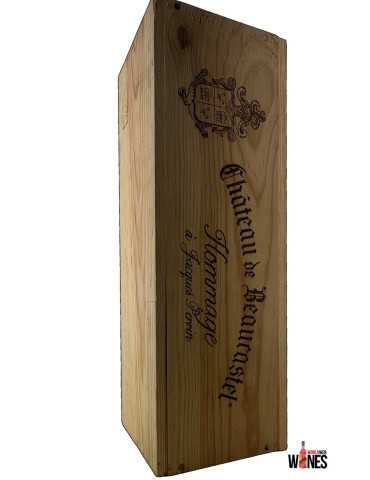
Discover below the bottles from Château de Beaucastel currently available at World Web Wines, selected according to arrivals, cuvée rarity, vintage quality, bottle condition and ageing potential.