English
 Français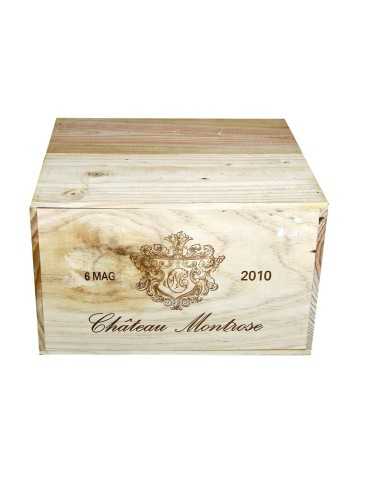
2,852.00 CHF

France • Bordeaux • Médoc • Saint-Estèphe • Château Montrose • 1855 Second Growth • Cabernet Sauvignon
Château Montrose — The Majestic Strength of Saint-Estèphe
Château Montrose is one of the great historic names of Saint-Estèphe and a Second Growth in the 1855 Classification. Located facing the Gironde estuary, the estate embodies a deep, structured and aristocratic expression of the Médoc, with wines renowned for their power, mineral freshness and remarkable ageing potential.
Owned by Martin and Olivier Bouygues since 2006, Montrose has undergone a major transformation driven by a long-term vision: viticultural precision, modernised facilities, environmental responsibility and an increasingly refined reading of its terroir. Today, the château produces wines of great density, but also of growing precision and elegance.
The spirit of the château
A Saint-Estèphe of structure, depth and restraint. Montrose does not seek immediate effect: it builds solid, noble and long-lined wines, where the power of Cabernet Sauvignon, the freshness of deep gravel and the depth of clay merge into an architecture made for very long ageing.
History: a remarkable rise in the Médoc
The history of Château Montrose is relatively recent by Médoc standards, yet its rise was spectacular. The estate developed in the 19th century on a gravel rise overlooking the Gironde estuary. Within only a few decades, the quality of its wines earned it a place in the prestigious 1855 Classification as a Second Growth.
Montrose quickly established itself as one of the most solid and consistent growths of Saint-Estèphe. Its reputation is built on wines capable of ageing for a very long time — sometimes austere in youth, but gaining complexity, nobility and aromatic depth with age.
Since the estate was acquired by the Bouygues brothers in 2006, its qualitative ambition has been further reinforced. Investments have improved vinification precision, reduced the château’s environmental footprint and pushed parcel selection even further. Montrose now ranks among the most sought-after references of the contemporary Médoc.
Terroir: deep gravel, blue clay and the influence of the Gironde
The vineyard of Château Montrose covers around 95 hectares in a single block, a rare asset in the Médoc. Located on a rise overlooking the Gironde estuary, it benefits from the river’s regulating influence, which partly protects the vineyard from climatic extremes and encourages slow, even ripening.
The terroir is composed of deep gravel, perfectly draining, over a layer of blue clay. This combination is one of the keys to the Montrose style: gravel favours Cabernet Sauvignon ripeness and brings finesse, tension and mineral complexity; clay provides valuable water reserves and reinforces the wine’s power and depth.
The vineyard is dominated by Cabernet Sauvignon, complemented by Merlot, Cabernet Franc and Petit Verdot. Exact proportions vary according to sources and vintages, but the château’s identity remains unmistakably Médoc: structure, freshness, cassis, graphite, noble tannins and great longevity.
Terroir expression: Saint-Estèphe, deep gravel, blue clay, Gironde estuary, Cabernet Sauvignon, Merlot, Cabernet Franc, Petit Verdot, cassis, graphite, freshness and power.
Montrose signature: aristocratic structure, density, minerality, powerful yet precise tannins, great freshness and exceptional ageing capacity.
Viticulture: precision, sustainability and demanding selection
Château Montrose is known for the rigour of its vineyard work. Pruning, leaf removal, yield management and harvesting are adapted to each parcel. The estate seeks full ripeness without excess, while preserving the natural acidity and freshness that define the nobility of great Saint-Estèphe wines.
Harvesting is carried out by hand, with rigorous sorting to retain only the finest grapes. The estate also follows an ambitious environmental policy based on biodiversity, water management, reduced energy consumption and a sustainable approach to viticulture.
Aromatic profile
Youth: cassis, blackberry, black plum, blueberry, violet, graphite, cedar, liquorice, blond tobacco, black pepper and fine spices.
Evolution: black truffle, fine leather, cigar, forest floor, pencil lead, cocoa, candied black fruits, damp earth and smoky notes.
Texture: dense palate, powerful and firm tannins, Médoc freshness, vertical structure and long finish.
Overall impression: a deep, noble and energetic Saint-Estèphe, whose power slowly merges with age into great classical elegance.
Vinification: parcel precision and controlled ageing
Vinification is conducted with great parcel precision. Grapes are vinified in vats adapted to each lot, in order to respect differences in ripeness, soil and grape variety. Macerations extract colour, structure and depth while seeking noble and precise tannins.
Harvest: manual picking, rigorous selection and precise sorting of the grapes.
Vinification: parcel-based work, temperature-controlled vats, macerations adapted to each lot and a search for balanced extraction.
Ageing: around 18 months in French oak barrels, with a significant but measured proportion of new oak depending on the vintage.
Philosophy: accompany the natural power of the terroir, polish the tannins and preserve fruit purity as well as mineral freshness.
Wine style
The style of Château Montrose is that of a great classical Saint-Estèphe: deep, structured, dark, mineral and built for time. In youth, the wine can appear dense, reserved and tannic; with age, it gains refinement, complexity and aromatic nobility.
The finest vintages develop notes of cassis, graphite, cedar, tobacco, leather, truffle and spice. The strength of the wine lies not only in its power, but in its ability to retain freshness and tension over several decades.
Emblematic cuvées
Château Montrose: the estate’s grand vin, a Saint-Estèphe Second Growth. Dominated by Cabernet Sauvignon, it expresses the depth, power, freshness and longevity of the Montrose terroir.
La Dame de Montrose: the château’s second wine, made from parcel selection and lots that are more accessible in youth. Softer and more immediate, it retains the estate’s signature: black fruit, elegance, freshness and Médoc structure.
Tertio de Montrose: the estate’s more recent third wine, created in a more accessible register while remaining marked by the identity of Saint-Estèphe.
Vintages, ageing and collectability
Château Montrose is one of the great age-worthy wines of the Médoc. Historic vintages such as 1989, 1990, 1996, 2003, 2009, 2010, 2016, 2018, 2019, 2020 and 2022 are among the most sought-after references, depending on style and tasting preferences.
In great vintages, ageing potential can reach 30 to 40 years, sometimes more. Montrose often requires patience: its powerful tannins, acidity and mineral depth integrate slowly, producing majestic, complex and highly harmonious wines with time.
Gastronomic pairings
Château Montrose pairs ideally with red meats, roast lamb, aged beef, game, duck, black truffle dishes, reduced jus, noble mushrooms and mature cheeses. Its structure and freshness make it a natural partner for deep, savoury and classical cuisine.
Key facts
Region: Bordeaux, Médoc
Appellation: Saint-Estèphe
Château: Château Montrose
Classification: Second Growth in the 1855 Classification
Owners: Martin and Olivier Bouygues since 2006
Surface area: around 95 hectares in a single block
Terroir: deep gravel over blue clay, influenced by the Gironde estuary
Grape varieties: Cabernet Sauvignon majority, Merlot, Cabernet Franc and Petit Verdot
Second wine: La Dame de Montrose
Style: profound, structured, mineral, classical, powerful, fresh, elegant with age and built for very long ageing.
In summary: Château Montrose is one of the greatest wines of Saint-Estèphe. A Second Growth in the 1855 Classification, with an exceptional 95-hectare single-block vineyard, it produces deep, mineral, powerful wines of remarkable longevity.
Dominant aromas: cassis, blackberry, black plum, blueberry, violet, graphite, cedar, liquorice, blond tobacco, cigar, black truffle, fine leather, cocoa, forest floor and a long mineral finish.
Current selection
Discover below the bottles from Château Montrose currently available at World Web Wines, selected according to arrivals, vintage quality and the rarity of allocations.
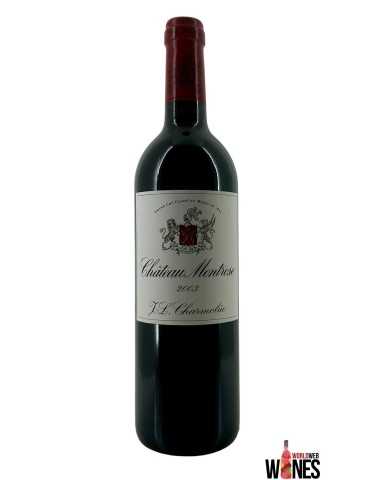
189.00 CHF