English
 Français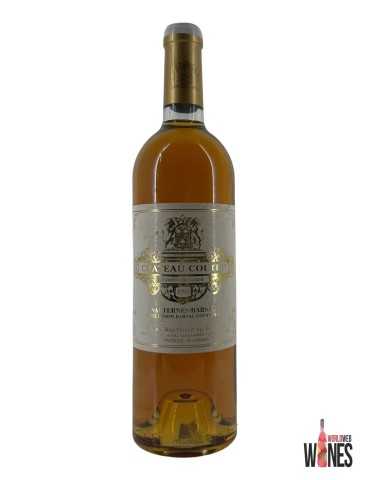
43.00 CHF

Château signature
A Premier Grand Cru Classé of Barsac in the 1855 Classification, Château Coutet is one of Bordeaux’s historic references for great sweet wines. Led by the Baly family, the estate produces luminous, fresh and profound Sauternes-Barsac wines, where the richness of noble rot is balanced by remarkable limestone tension.
France • Bordeaux • Barsac • Sauternes-Barsac • Château Coutet • Premier Grand Cru Classé 1855 • Sémillon • Sauvignon Blanc
Château Coutet — The Limestone Freshness of Great Barsac Sweet Wines
Located in Barsac, at the heart of the Sauternes-Barsac appellation, Château Coutet is one of Bordeaux’s great historic estates. Classified as a Premier Grand Cru Classé in 1855, the château is renowned for sweet wines of remarkable purity, combining aromatic richness, natural freshness and outstanding ageing potential.
Owned by the Baly family, Château Coutet embodies a highly distinctive expression of Barsac: more aerial, more limestone-driven and often more taut than some of the more opulent sweet wines of Sauternes. Noble rot brings concentration, complexity and depth, while the limestone soils of the Barsac plateau preserve the freshness that is essential to the wine’s balance.
The spirit of the château
A great sweet wine of light, precision and freshness. Château Coutet seeks the balance between the richness of botrytised grapes, the natural vibrancy of the Barsac terroir and the aromatic finesse of Bordeaux’s finest sweet white wines. The style is defined by brightness, clarity, length and the ability to age gracefully for several decades.
History: a historic Premier Grand Cru Classé
The history of Château Coutet goes back several centuries, making it one of the oldest and most respected names in Barsac. Its classification as a Premier Grand Cru Classé in the official 1855 Classification confirmed early on the exceptional quality of its sweet wines.
Since the arrival of the Baly family, the estate has pursued demanding work in both vineyard and cellar, with the aim of preserving Coutet’s singular identity: wines that are deep and complex, yet always carried by clear freshness and a precise expression of terroir.
Terroir: the limestone character of Barsac
Château Coutet’s vineyard lies on the limestone terroirs of Barsac, which give the wines their recognisable freshness, tension and finesse. This geology distinguishes Barsac within the world of great Bordeaux sweet wines, bringing a more lifted and mineral sensation.
The vineyard is planted mainly with Sémillon, complemented by Sauvignon Blanc and a smaller proportion of Muscadelle. Sémillon brings texture, depth and a natural affinity for noble rot; Sauvignon Blanc supports freshness and aromatic lift; Muscadelle adds a floral and lightly spicy nuance.
Expression of place: Barsac, limestone, noble rot, Sémillon, Sauvignon Blanc, Muscadelle, candied citrus, apricot, fine honey, saffron, white flowers and mineral freshness.
Château Coutet signature: precise, luminous and profound sweet wines, combining botrytised richness, natural balance and outstanding ageing capacity.
Viticulture and vinification: the pursuit of noble rot
The production of a great Barsac relies on meticulous selection of grapes affected by noble rot. Harvesting is carried out through successive passages through the vineyard, selecting only berries that have reached the desired level of concentration. This demanding process naturally limits yields, but guarantees complexity and balance.
Vinification and ageing are conducted with precision in order to preserve fruit purity, aromatic richness and the freshness of the terroir. Barrel ageing allows the wine to gain texture and complexity without masking the brightness that defines the finest wines of Coutet.
Wine style
Château Coutet produces sweet wines of great elegance, often marked by aromas of candied apricot, orange zest, preserved lemon, mango, roasted pineapple, acacia honey, wax, saffron, orange blossom and sweet spices.
On the palate, the style is defined by controlled richness, lively acidity and a long, fresh, slightly saline finish. With age, the wines develop notes of dried fruits, blond caramel, tea, oriental spices, white truffle and citrus marmalade, while retaining remarkable energy.
Emblematic cuvées
Château Coutet: the estate’s grand vin, a Premier Grand Cru Classé of Barsac. A deep, fresh and complex sweet wine built for very long ageing.
Chartreuse de Coutet: the château’s second wine, offering a more accessible expression of the Coutet style, with fruit, freshness and balance.
Opalie de Château Coutet: a dry white wine produced in limited quantities, reflecting the estate’s precision with great white wines from Barsac.
Ageing and gastronomic pairings
The great vintages of Château Coutet can age for several decades. Their balance between sugar, acidity, noble rot and minerality allows them to evolve slowly towards greater complexity while retaining freshness.
At the table, Château Coutet pairs beautifully with foie gras, poultry with sweet spices, blue cheeses, Roquefort, citrus desserts, tarte Tatin, roasted fruits, refined Asian cuisine and sweet-savoury dishes. Older vintages may also be enjoyed on their own as great meditative wines.
Key facts
Country: France
Region: Bordeaux
Appellation: Barsac, Sauternes-Barsac
Château: Château Coutet
Classification: Premier Grand Cru Classé in 1855
Owner family: Baly family
Terroir: limestone soils of Barsac
Grape varieties: Sémillon, Sauvignon Blanc, Muscadelle
Wine type: great Bordeaux sweet wine, with a limited production of dry white wine
Major cuvées: Château Coutet, Chartreuse de Coutet, Opalie de Château Coutet
Style: luminous, fresh, profound, botrytised and precise Barsac wine built for very long ageing.
In summary: Château Coutet embodies one of the most refined expressions of Barsac. A Premier Grand Cru Classé in 1855, the estate produces profound, fresh and luminous sweet wines, where the richness of noble rot is balanced by limestone tension and great aromatic precision.
Dominant aromas: candied apricot, orange zest, preserved lemon, mango, roasted pineapple, acacia honey, wax, saffron, orange blossom, dried fruits, blond caramel and a long fresh finish.
Current selection
Discover below the bottles from Château Coutet currently available at World Web Wines, selected according to arrivals, vintage rarity, bottle condition and ageing potential.