English
 Français

1961 Vintage — A Historic Year of Concentration, Structure and Longevity
The 1961 vintage is one of the great historic years of the 20th century. Marked by very low yields, natural concentration and remarkable ageing potential, it produced some of the most sought-after wines of the post-war period. In Bordeaux, 1961 stands among the absolute peaks of the century, while the Rhône Valley also produced bottles that have become legendary.
Today, 1961 wines are above all collector bottles, admired for their rarity, historical value and emotional resonance. The finest examples can still offer exceptional depth when perfectly stored. At more than sixty years of age, however, each bottle must be assessed individually: fill level, colour, cork, capsule, label, provenance and storage history are decisive.
Bordeaux 1961: the heart of the vintage
In Bordeaux, 1961 is one of the most admired vintages of the 20th century. The harvest was extremely small, but the grapes produced wines of rare concentration, supported by deep tannic structure, intense aromatics and remarkable longevity. The greatest bottles combine density, balance, restrained power and complexity.
The most important successes are found in Pauillac, Pomerol, Pessac-Léognan, Saint-Julien and Margaux. Great Bordeaux 1961 can develop aromas of blackcurrant, cedar, blond tobacco, fine leather, truffle, graphite, sweet spices and noble undergrowth. Their prestige is considerable, but their true value always depends on the precise condition of the bottle.
- Château Latour 1961 — An absolute Pauillac benchmark, deep, powerful and built for exceptional longevity.
- Château Haut-Brion 1961 — A monumental success from Graves, renowned for its complexity, refinement and noble aromatic depth.
- Château Palmer 1961 — A historic Margaux, often regarded as one of the greatest wines ever produced by the estate.
Buying priority: Bordeaux is the central reference point of the 1961 vintage. The great classified growths should, however, be selected only with clearly documented provenance and impeccable condition.
Rhône Valley 1961: power, depth and legend
In the Rhône Valley, 1961 is also a major historic vintage. Northern Rhône wines can show a deep and refined expression of Syrah, with notes of evolved black fruit, pepper, smoke, leather, liquorice, dried meat and spices. In the south, certain Châteauneuf-du-Pape wines were rich, generous and remain highly sought after.
Great Rhône bottles from 1961 have become rare. The finest examples can still impress with their structure and intensity, but bottle variation is significant. Fill level, colour, capsule and provenance must therefore be examined with the same care as for mature Bordeaux.
- Hermitage La Chapelle 1961 – Paul Jaboulet Aîné — An absolute icon of historic Rhône wine and one of the legendary bottles of the vintage.
- Château Rayas 1961 — A rare and sought-after Châteauneuf-du-Pape, emblematic of mature southern Rhône wines.
- Côte-Rôtie 1961 — To be considered according to producer, storage history and the actual condition of the bottle.
Buying priority: the Rhône Valley is the other great pillar of the 1961 vintage, especially for lovers of Hermitage, mature Syrah and profound cellar wines.
Champagne 1961: maturity, finesse and historic prestige
In Champagne, 1961 is a great historic vintage. The best cuvées can combine maturity, finesse, aromatic complexity and great elegance. Mature champagnes from this year often develop nuances of dried fruit, brioche, hazelnut, honey, candied citrus, wax and noble oxidative notes.
As always with old champagnes, the real condition of the bottle is essential. Disgorgement, fill level, capsule, cork and storage conditions have a major influence on present quality. A great name is not enough: each bottle must be examined carefully.
- Dom Pérignon 1961 — An emblematic reference for the vintage, highly sought after by lovers of mature champagne.
- Krug 1961 — A historic prestige cuvée, best selected with clear provenance and impeccable condition.
- Great vintage cuvées from 1961 — To be selected according to the house, disgorgement and storage history.
Buying priority: Champagne 1961 deserves an important place within the vintage, but only when information about storage and disgorgement is sufficiently clear.
Burgundy 1961: real potential, strict selection
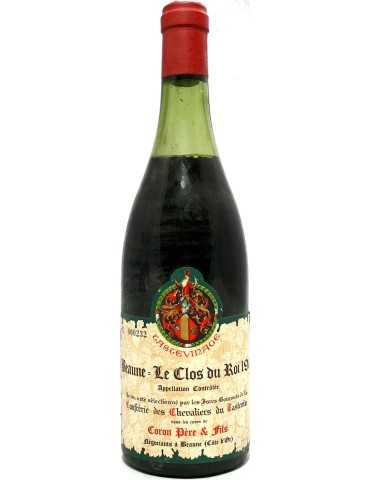
In Burgundy, 1961 is a notable vintage, though more heterogeneous than Bordeaux or the Rhône. The finest reds, from great terroirs and serious producers, can still offer evolved fruit, attractive concentration, notes of undergrowth, spice, truffle and a delicately resolved structure.
Success was not uniform. For Burgundy 1961, producer, appellation, fill level and traceability matter more than the prestige of the cru alone. Grand cru and premier cru bottles from the Côte de Nuits and Côte de Beaune can offer memorable experiences, but only when preserved in excellent condition.
Buying priority: Burgundy 1961 can be magnificent, but it remains a category for strict selection, reserved for bottles whose condition inspires real confidence.
Piedmont 1961: mature Nebbiolo with character
In Piedmont, 1961 can offer very fine mature wines made from Nebbiolo, particularly in Barolo and Barbaresco. The best examples develop notes of dried rose, leather, tobacco, noble tar, spices, liquorice and undergrowth. Their charm lies in a patinated, complex and deeply traditional expression.
This vintage remains, however, far less central commercially than Bordeaux or the Rhône. The producer, bottling, provenance and fill level are essential. These bottles should be seen as rare witnesses of mature Nebbiolo rather than guaranteed tasting purchases.
Sauternes, Barsac and Port 1961: secondary categories
The 1961 vintage is not a major reference for Sauternes and Barsac. Some bottles may have historical interest, but they should not be prioritised over better-established great sweet wine vintages.
For Port, 1961 is also a secondary year. The 1960 and 1963 vintages occupy a much more important place in the history of Vintage Port. A 1961 Port may appeal to a collector or suit a birth-year search, but it should be approached with caution, according to the house, fill level and cork condition.
For a 1961 wine, the most reliable priorities remain great Bordeaux, the finest bottles from the Rhône Valley, selected vintage champagnes and carefully chosen Burgundies. For any mature bottle, provenance, fill level, colour and overall condition matter more than the prestige of the label alone.
Summary of the 1961 vintage
| Bordeaux | The peak of the vintage, with concentrated, powerful wines of exceptional longevity. |
| Rhône Valley | A great vintage, particularly for Hermitage, Côte-Rôtie and selected Châteauneuf-du-Pape. |
| Champagne | A historic vintage, best chosen with clear information about storage and disgorgement. |
| Burgundy | Real potential, but strongly dependent on producer, cru and bottle condition. |
| Piedmont | Fine mature Nebbiolo possible, but a rarer and more selective category. |
| Sauternes & Port | Mainly of patrimonial or anniversary interest, but not a priority within the vintage. |
1961: a vintage of rarity, concentration and legend
The 1961 vintage remains one of the great collector years of the 20th century. Bordeaux is its centre of gravity, with powerful, concentrated and deeply sought-after wines. The Rhône Valley forms the other major pillar of the vintage, carried by bottles that have become legendary. Champagne also deserves close attention, while Burgundy and Piedmont require more rigorous selection. For any 1961 wine, storage, provenance and the actual condition of the bottle remain the decisive criteria.