English
 Français
Château Pichon Longueville Comtesse de Lalande — The Singular Grace of a Great Pauillac
Château Pichon Longueville Comtesse de Lalande, often known as Pichon Comtesse, holds a special place among the great wines of Pauillac. Classified as a Second Growth in the 1855 Classification, it embodies a particularly refined expression of the Médoc: the depth of Cabernet Sauvignon, the sensuality of Merlot, the floral finesse of Cabernet Franc and the silky texture that has long distinguished the estate.
Owned by the Rouzaud family, through Maison Louis Roederer, since 2007, the château has undergone a major transformation, driven by greater precision, sustainability and parcel-by-parcel understanding. Pichon Comtesse remains one of the most sought-after names in Pauillac, admired for its balance between Médoc power, freshness and natural elegance.
A Pauillac of balance and distinction. Pichon Comtesse is not defined by power alone, but by the quality of its texture, the precision of its tannins, the nobility of its black fruit and its rare ability to combine depth, charm and longevity. Its signature lies in natural elegance, without sacrificing the structure of great Médoc terroirs.
History: a great growth shaped by visionary figures
The history of Pichon Comtesse is part of the wider story of the great Pichon Longueville estate, whose division in the 19th century gave rise to two now-famous neighbouring properties: Pichon Longueville Baron and Pichon Longueville Comtesse de Lalande. From the 1855 Classification, Pichon Comtesse was recognised as a Second Growth.
The château owes part of its identity to strong female figures, notably Virginie de Lalande, who gave the cru its name, and later May-Eliane de Lencquesaing, a major figure in the estate’s 20th-century history. Their influence helped shape an image of grace, precision and elegance, long associated with the style of the property.
Since the arrival of Maison Louis Roederer, investments have reinforced the precision of both vineyard work and vinification. New technical facilities, a finer understanding of the soils and the evolution of viticultural practices have helped define the Grand Vin and its second wine, Réserve de la Comtesse, with even greater clarity.
Terroir: deep gravel and a Saint-Julien nuance
The vineyard of Pichon Comtesse covers around 89 hectares, depending on the parcels farmed and the vintage. Located in Pauillac, it rests on deep gravel soils with excellent drainage, typical of the great Médoc terroirs and particularly well suited to Cabernet Sauvignon.
The estate has a rare particularity: part of its vineyard lies in the neighbouring commune of Saint-Julien. This component brings an additional nuance to the style of the cru, often associated with a sense of suppleness, finesse and refinement in the final blend.
The vineyard is dominated by Cabernet Sauvignon, complemented by Merlot, Cabernet Franc and Petit Verdot. Proportions vary according to the vintage, but the château’s identity remains founded on balance between structure, charm, freshness and aromatic precision.
Terroir expression: Pauillac, deep gravel, Saint-Julien, Cabernet Sauvignon, Merlot, Cabernet Franc, Petit Verdot, cassis, violet, cedar, graphite, freshness and fine tannins.
Pichon Comtesse signature: Médoc structure, velvety texture, Merlot charm, Cabernet precision, silky tannins, great freshness and long ageing potential.
Viticulture: parcel precision and sustainability
The estate carries out precise vineyard work based on soil observation, parcel selection and the adaptation of practices to each part of the vineyard. Sustainability has become an important focus, with particular attention paid to biodiversity, soil vitality and the natural management of balance in the vines.
Harvesting is carried out with rigorous grape selection, retaining only the lots capable of bringing freshness, density, precision and elegance to the final blend. This approach helps preserve the refined character of the cru, even in warmer vintages.
Youth: cassis, blackberry, black raspberry, violet, peony, cedar, graphite, liquorice, blond tobacco, fine spices and precious wood.
Evolution: black truffle, forest floor, fine leather, cigar, pencil lead, candied black fruits, cocoa, black tea and faded floral notes.
Texture: broad, silky and precise palate, fine tannins, Médoc freshness, velvety mid-palate and long finish.
Overall impression: a distinguished, deep and sensual Pauillac, whose strength is expressed more through texture and refinement than through demonstrative power.
Vinification: selection, gentle extraction and controlled ageing
Vinification is carried out with great parcel precision, in vats adapted to each lot, in order to respect differences in soil, grape variety and ripeness. Extraction is measured: the aim is to build a dense yet fine structure, without hardening the wine’s natural texture.
Vinification: parcel-by-parcel work, wooden and stainless-steel vats depending on the lots, gentle extraction and a search for balance between density and elegance.
Blending: meticulous selection of lots to express both the depth of Pauillac and the characteristic suppleness of the Comtesse style.
Ageing: around 18 months in French oak barrels, with a significant but adjusted proportion of new oak depending on the vintage.
Philosophy: preserve the grace of the fruit, polish the tannins and accompany the natural structure of the cru without masking its identity.
Wine style
The style of Château Pichon Longueville Comtesse de Lalande is defined by a rare alliance between Pauillac depth and a particularly silky texture. The wine has the structure of great Médoc Cabernet Sauvignon, while retaining a suppleness, freshness and floral dimension that give it an immediately recognisable personality.
In youth, Pichon Comtesse often offers precise black fruit, floral notes and an already enveloping palate. With age, the wine gains complexity, developing nuances of cedar, tobacco, truffle, fine leather, forest floor and graphite. The great vintages can evolve gracefully for several decades.
Emblematic cuvées
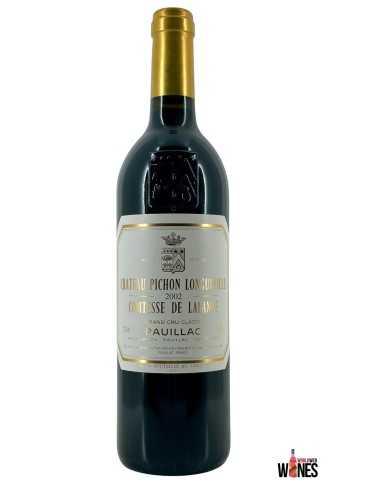
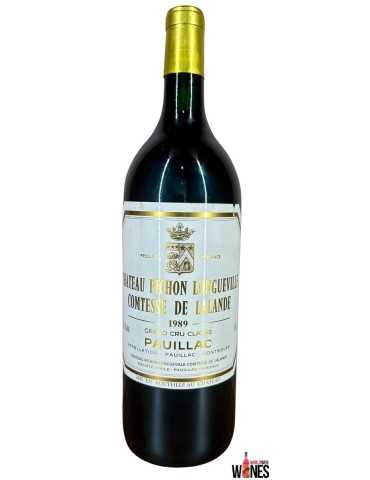
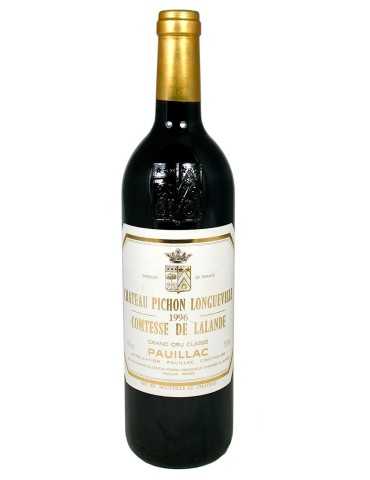
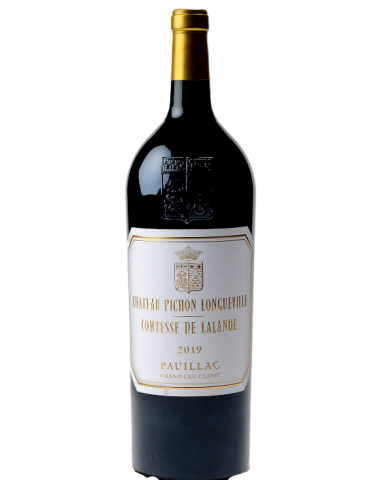
Château Pichon Longueville Comtesse de Lalande: the estate’s Grand Vin, a Pauillac Second Growth. It expresses the essence of the Comtesse style: depth, finesse, structure, velvety texture and long aromatic persistence.
Réserve de la Comtesse: the château’s second wine, more accessible in youth while retaining the estate’s signature: black fruit, supple texture, freshness, precision and elegance.
Vintages, ageing and gastronomic pairings
Château Pichon Comtesse is one of the great age-worthy wines of the Médoc. Recent vintages such as 2016, 2018, 2019, 2020 and 2022 are among the most sought-after, each expressing a different balance of power, freshness, velvet and precision.
The Grand Vin pairs beautifully with beef fillet, aged rib of beef, milk-fed lamb, fine game, duck, Bresse poultry, truffle dishes, noble mushrooms and mature cheeses. Réserve de la Comtesse lends itself to more immediate pairings such as roast poultry, veal, mushroom risotto or grilled meats.
Region: Bordeaux, Médoc
Appellation: Pauillac
Château: Château Pichon Longueville Comtesse de Lalande
Classification: Second Growth in the 1855 Classification
Ownership: Rouzaud family / Maison Louis Roederer since 2007
Surface area: around 89 hectares, depending on the parcels farmed and the vintage
Terroir: deep gravel soils in Pauillac, with part of the vineyard located in Saint-Julien
Grape varieties: Cabernet Sauvignon, Merlot, Cabernet Franc, Petit Verdot
Second wine: Réserve de la Comtesse
Style: deep, silky, floral, precise, velvety, refined, Médoc-driven and built for ageing.
In summary: Château Pichon Longueville Comtesse de Lalande is one of Pauillac’s greatest growths. A Second Growth in the 1855 Classification and owned by the Rouzaud family since 2007, it produces deep, silky and refined wines where Médoc structure is matched by a singular elegance.
Dominant aromas: cassis, blackberry, black raspberry, violet, peony, cedar, graphite, liquorice, blond tobacco, black truffle, fine leather, cocoa, black tea, forest floor and a long velvety finish.
Current selection
Discover below the bottles from Château Pichon Longueville Comtesse de Lalande currently available at World Web Wines, selected according to arrivals, vintage quality and the rarity of allocations.