English
 Français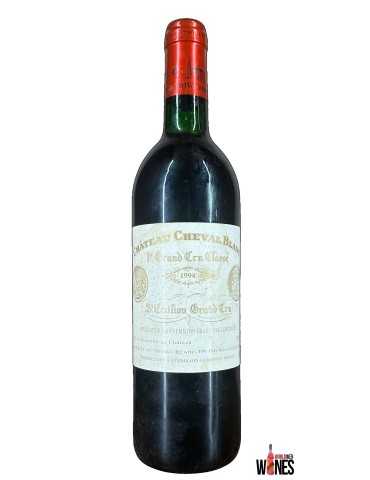
383.00 CHF

Filters (1 product)
France • Bordeaux • Right Bank • Saint-Émilion • Château Cheval Blanc
Château Cheval Blanc — The absolute elegance of the Right Bank
Château Cheval Blanc is one of the most mythical names in Saint-Émilion and across the entire Bordeaux Right Bank. A legendary estate sought after by collectors around the world, it embodies an immediately recognisable style: a rare combination of grace, depth, aromatic precision, silky texture and exceptional longevity.
Located at the border between Saint-Émilion and Pomerol, Cheval Blanc possesses a singular terroir, marked by a strong presence of Cabernet Franc, complemented by Merlot and a small proportion of Cabernet Sauvignon. Formerly a Premier Grand Cru Classé A, the château chose to withdraw from the Saint-Émilion classification before the 2022 revision, without this affecting its prestige or its status as a global icon.
The spirit of the château
Cheval Blanc expresses a Right Bank style based on finesse rather than demonstration. The château seeks a balance between the floral freshness of Cabernet Franc, the roundness of Merlot, the precision of the terroir and a tannic architecture of rare nobility. Its greatness lies in grace, length and the ability to age for decades without losing its radiance.
History and identity of Château Cheval Blanc
The modern history of Château Cheval Blanc began in 1832, when Jean-Jacques Ducasse, president of the Libourne court, acquired the heart of the estate. Over the following decades, several parcels, notably from the former Figeac estate, were brought together to form a remarkably coherent property.
From the nineteenth century onwards, Cheval Blanc stood apart through an unusual choice for Saint-Émilion: giving a major role to Cabernet Franc. This grape variety, rarely so dominant on the Right Bank, became one of the keys to the estate’s identity, bringing freshness, verticality, floral perfume and an extremely fine tannic frame.
Ranked among the greatest growths of Saint-Émilion from the first classification in 1955, Cheval Blanc long held the title of Premier Grand Cru Classé A. Its voluntary withdrawal before the 2022 classification was a strategic and philosophical decision, without changing the perception of the château: Cheval Blanc remains one of the absolute references of Bordeaux.
A unique terroir at the border of Pomerol
The Cheval Blanc vineyard covers approximately 39 hectares, at the far north-west of Saint-Émilion, directly bordering Pomerol. This particular location gives the wine a rare identity within the appellation, combining the floral finesse of Saint-Émilion with the textural depth found in some neighbouring great terroirs.
The soils combine gravel, clay and sand, forming a highly complex parcel mosaic. Gravel brings drainage, tension and finesse; clay gives depth, volume and ageing capacity; sand contributes aromatic elegance and delicacy of touch.
This combination explains Cheval Blanc’s unique character: a wine capable of being both airy and profound, silky and structured, intense yet never heavy. Parcel precision allows the château to build each vintage like a haute couture blend.
Terroir expression: Saint-Émilion, proximity to Pomerol, gravel, clay, sand, Cabernet Franc, Merlot, Cabernet Sauvignon, floral freshness, silky texture and depth.
Cheval Blanc signature: Cabernet Franc dominance, parcel precision, haute couture blending, noble tannins, aromatic purity, balance and very long ageing potential.
Cabernet Franc, Merlot and vineyard precision
The grape composition of Cheval Blanc is unusual for Saint-Émilion, with a majority of Cabernet Franc, generally around 52%, complemented by approximately 43% Merlot and a small share of Cabernet Sauvignon. This vineyard architecture shapes the château’s style: more floral, more slender and more vertical than many great Right Bank wines.
Cabernet Franc brings freshness, tannic finesse, tension and the floral notes that define Cheval Blanc. Merlot contributes flesh, texture and depth. Cabernet Sauvignon, when included, adds an extra touch of structure and definition.
The strength of the estate lies in its ability to blend these grape varieties and soils with remarkable precision, creating a wine whose elegance is never based on lightness, but on perfectly balanced depth.
Viticulture: parcel precision and a living vineyard approach
Viticulture at Cheval Blanc is based on an extremely detailed understanding of each parcel. Soils, exposures, vine age, grape varieties and water behaviour are studied with remarkable precision. This detailed reading makes it possible to adapt vineyard work to each micro-terroir.
The château has also developed an agronomic approach attentive to natural balance, soil vitality and vineyard resilience. The objective remains constant: to obtain grapes of perfect maturity, without excess, capable of expressing the finesse of the site and the nobility of Cabernet Franc.
Château profile
Structure: deep, slender, silky, precise and built for very long ageing.
Aromatic expression: violet, rose, raspberry, black cherry, blackberry, cassis, graphite, liquorice, gentle mint, discreet cedar and fine spices.
Texture: ample palate, velvety tannins, extended freshness, airy balance and persistent finish.
Personality: a Saint-Émilion of exceptional grace, where depth is expressed not through heaviness, but through precision, length and aromatic vibration.
Vinification: haute couture blending
Vinification at Cheval Blanc is based on extremely precise parcel selection. Each lot is vinified separately in order to preserve its identity, then tasted and monitored rigorously until the final blend. The Grand Vin is born from this meticulous construction, where each parcel contributes its own nuance.
Extractions are measured in order to preserve the nobility of texture and aromatic freshness. Ageing in barrel supports the wine with precision, without masking its floral finesse or the natural balance of its architecture.
Harvest: manual harvesting, rigorous selection and picking adapted to each parcel.
Vinification: parcel-by-parcel work, measured extractions and a search for noble tannic texture.
Ageing: barrel ageing with precise integration, accompanying the wine without masking its floral finesse.
Philosophy: creating a wine of grace and depth, where every component of the blend contributes to final harmony.
Style of the wines
The style of Château Cheval Blanc is defined by an almost airy elegance. Cabernet Franc brings violet, freshness, tension and tannic finesse; Merlot gives flesh, velvet texture and depth; Cabernet Sauvignon adds an extra touch of structure when included.
The finest vintages can age for several decades. Over time, the fruit evolves towards nuances of truffle, fine leather, blond tobacco, undergrowth, black tea, spices and dried flowers, while retaining remarkable freshness. Cheval Blanc is a wine of patience, but also of pure emotion in great years.
Emblematic cuvées
Château Cheval Blanc: the estate’s Grand Vin, mainly produced from Cabernet Franc and Merlot, with a possible touch of Cabernet Sauvignon depending on the vintage. A global icon of fine Bordeaux, it combines depth, floral purity, velvety texture and very long ageing capacity.
Le Petit Cheval: the château’s second wine, made with the same level of precision, but generally more accessible in its youth. It expresses the terroir’s precision in a more immediate reading.
Le Petit Cheval Blanc: the estate’s rare dry white wine, made from Sauvignon Blanc and Sémillon from a dedicated vineyard. It illustrates Cheval Blanc’s ambition to apply its parcel precision to a contemporary great Bordeaux white.
Vintages, ageing and collection
Certain vintages of Château Cheval Blanc belong to Bordeaux legend. 1947 remains one of the most mythical wines of the twentieth century, while years such as 1982, 1990, 2000, 2005, 2009, 2010, 2015, 2016, 2018, 2019 and 2020 are among the great modern references.
Ageing potential often exceeds 30 years in great vintages, and the finest bottles can last far longer. Its rare combination of structure, freshness and perfume makes it one of the most sought-after wines on the fine wine market.
Food pairings
Château Cheval Blanc naturally pairs with noble meats, roast lamb, mature beef, veal with morels, delicate game, black truffle and aged cheeses. Its tannic finesse and floral perfume also allow more subtle pairings with roasted poultry, mushroom dishes or refined cuisine based on reduced jus.
Key information
Region: Bordeaux, Right Bank
Appellation: Saint-Émilion Grand Cru
Château: Château Cheval Blanc
Modern origins: 1832, with the acquisition of the heart of the estate by Jean-Jacques Ducasse
Vineyard area: approximately 39 hectares
Parcel structure: mosaic of parcels on gravel, clay and sand
Grape varieties: Cabernet Franc dominant, Merlot and a small proportion of Cabernet Sauvignon
Historical classification: former Premier Grand Cru Classé A of Saint-Émilion, withdrawn before the 2022 classification
Key figures: Pierre Lurton, Pierre-Olivier Clouet
Style: floral, silky, deep, precise, long, noble, elegant and built for very long ageing.
In summary: Château Cheval Blanc is one of Bordeaux’s great icons. Its unique terroir at the border between Saint-Émilion and Pomerol, its Cabernet Franc-dominant vineyard and its art of blending produce wines of exceptional grace, depth and longevity.
Dominant aromas: violet, rose, raspberry, black cherry, blackberry, cassis, graphite, liquorice, gentle mint, cedar, black truffle, blond tobacco, fine leather, undergrowth and a long floral finish.
Current selection
Available bottles of Château Cheval Blanc
Discover our current selection of Château Cheval Blanc: mature vintages, great years, rare bottles, Le Petit Cheval, Le Petit Cheval Blanc and bottles intended for lovers of fine Saint-Émilion wines. Each bottle should be chosen according to its vintage, condition, fill level, provenance and tasting potential.