English
 Français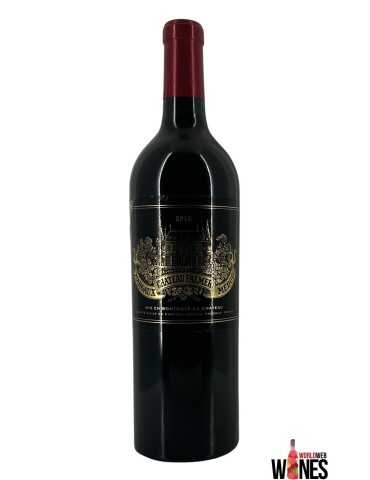
275.00 CHF

Filters (2 products)
France • Bordeaux • Médoc • Margaux • Château Palmer • Cabernet Sauvignon • Merlot • Petit Verdot
Château Palmer — The sensual depth and velvet refinement of Margaux
Château Palmer is one of the most revered estates in Margaux and one of the great names of Bordeaux. Classified as a Third Growth in 1855, it has long transcended its official ranking through the singular personality of its wines: velvety texture, aromatic depth, refined tannins, remarkable ageing capacity and a sense of harmony that places it among the most emotionally compelling wines of the Médoc.
Situated on one of the finest gravel terraces of the appellation, Château Palmer is renowned for a distinctive balance between Cabernet Sauvignon and Merlot, completed by a touch of Petit Verdot. This unusual composition for the Left Bank gives Palmer its unmistakable identity: the structure and nobility of Cabernet, the sensual roundness of Merlot, and the spicy depth of Petit Verdot.
The spirit of the estate
Palmer is a wine of texture, depth and time. Its style is never merely powerful: it is refined, tactile and layered, with a velvety grain that has become one of the estate’s signatures. The château seeks to place the identity of its terroir in the glass, through biodynamic viticulture, parcel-by-parcel precision and a patient approach to ageing.
History: from General Palmer to a modern icon of Margaux
The origins of Château Palmer are linked to the historic Domaine de Gascq, already known for the quality of its wines in the eighteenth century. In 1814, the estate was acquired by the British officer Charles Palmer, later Major-General, who expanded and modernised the property and gave it the name it still carries today.
In the mid-nineteenth century, the estate entered a new chapter under the Pereire brothers, influential financiers who developed the property and established the architectural identity of the château. Château Palmer was classified as a Troisième Grand Cru Classé in the famous 1855 Bordeaux Classification.
Since 1938, the estate has been guided by the families now represented by Sichel and Mähler-Besse. In 2004, Thomas Duroux took over the management of Château Palmer, bringing a long-term vision rooted in precision viticulture, biodynamics, technical refinement and a deep respect for the estate’s singular identity.
Terroir: deep gravels overlooking the Gironde
Château Palmer lies on the great gravel terraces of Margaux, shaped over time by the Garonne and the Gironde. The vineyard is planted on deep, well-draining Günzian gravels, with layers of stones, sand, clay and limestone elements that regulate water supply, encourage deep rooting and contribute to the wine’s natural tension.
The estate’s vineyard area is generally cited between approximately 55 and 66 hectares, depending on sources and whether figures refer to planted vines, the wider estate, or historical vineyard holdings. The core of the vineyard is dedicated to a highly distinctive Left Bank blend, built around near-equal proportions of Cabernet Sauvignon and Merlot, complemented by Petit Verdot.
This high proportion of Merlot is central to the Palmer identity. Planted on fine gravel terroirs more commonly associated with Cabernet Sauvignon, it brings generosity, velvety texture and aromatic sensuality, while Cabernet Sauvignon provides architecture, freshness and length. Petit Verdot adds colour, spice and additional depth.
Terroir expression: Margaux, deep gravels, Gironde influence, Cabernet Sauvignon, Merlot, Petit Verdot, drainage, warmth, aromatic refinement and long ageing potential.
Palmer signature: velvet tannins, floral depth, dark fruit, graphite, spice, freshness, sensuality and a rare balance between power and grace.
Biodynamic viticulture: precision through a living ecosystem
Château Palmer is one of the leading classified growths in Bordeaux to have embraced biodynamic viticulture at scale. The approach is not treated as a stylistic ornament, but as a way of understanding the vineyard as a living organism: soils, vines, animals, plants, microorganisms and human activity all form part of the same agricultural ecosystem.
The estate works with cover crops, biodiversity, compost, careful soil management and a precise reading of each parcel. Harvesting is carried out by hand, with rigorous selection of fruit. The aim is to produce grapes of clarity, depth and balance, capable of translating Margaux finesse without artifice.
Aromatic profile
In youth: blackcurrant, blackberry, black cherry, violet, rose petal, graphite, cedar, cocoa, liquorice and fine spices.
With age: truffle, cigar box, sandalwood, dried flowers, leather, tobacco leaf, undergrowth, black tea and savoury spice.
On the palate: velvety texture, deep fruit, refined tannins, noble freshness, layered complexity and a long, poised finish.
Overall impression: a Margaux of sensuality and precision, combining aromatic generosity, structural depth and exceptional elegance.
Vinification and ageing: parcel precision and patient refinement
In the cellar, each parcel is vinified separately in temperature-controlled vats, allowing the estate to preserve the identity of individual plots and fine-tune the final blend with great precision. Extraction is measured, designed to obtain depth and structure without hardening the tannins or obscuring the natural elegance of the fruit.
Ageing is generally long and carefully paced, often around 20 to 22 months depending on the vintage. The process includes ageing in 225-litre French oak barrels, with a proportion of new wood kept below dominance, followed by further maturation in larger vats to polish the texture and preserve the wine’s equilibrium.
Harvest: manual picking, strict selection and close monitoring of parcel maturity.
Vinification: parcel-by-parcel fermentation, controlled temperatures and gentle extraction.
Ageing: French oak barrels and larger vats, with an emphasis on integration, texture and aromatic purity.
Philosophy: build depth through precision and time, never through excess.
Wine style
Château Palmer is often described as one of the most sensual wines of the Left Bank. Its personality lies in the meeting of Margaux perfume and Médoc depth: violet, dark berries, spice, graphite, fine cedar and a tactile, almost cashmere-like tannin. The wine is powerful, but rarely austere; expressive, but never heavy.
With age, the greatest vintages gain extraordinary complexity, evolving toward truffle, tobacco, sandalwood, dried flowers and noble leather while retaining freshness and aromatic lift. In top years, Château Palmer can age for several decades, while Alter Ego de Palmer is generally more immediately expressive, though it too can develop beautifully with patience.
Emblematic wines
Château Palmer
Grand Vin of the estate: Château Palmer is the deepest and most complete expression of the property. It combines the architecture of Cabernet Sauvignon, the velvet of Merlot and the spicy resonance of Petit Verdot. The finest vintages are monumental yet refined, with decades of ageing potential and a signature of remarkable aromatic depth.
Alter Ego de Palmer
The other wine of Château Palmer: introduced with the 1998 vintage, Alter Ego is not conceived simply as a lesser version of the Grand Vin, but as another interpretation of the same terroir. It is typically more spontaneous, open and generous in youth, with silky tannins, vibrant fruit and the unmistakable Palmer touch.
Historical depth
Legendary vintages: Palmer has produced several historic bottles, including celebrated vintages such as 1961, 1983, 1989, 2000, 2005, 2009, 2010, 2015, 2016 and 2019. The greatest years are prized by collectors for their ability to unite power, perfume and longevity.
A rare voice among the great wines of Bordeaux
Château Palmer occupies a singular position in Bordeaux. Officially a Third Growth, it is widely regarded as performing at the level of the finest estates of the Médoc, with a reputation built not on classification alone but on consistency, personality and the emotional character of its wines.
Its rarity is reinforced by global demand, strict selection, vintage variation and the estate’s commitment to producing wines that reflect the exact conditions of each year. For collectors and lovers of great Bordeaux, Palmer represents a form of Margaux at its most tactile, aromatic and deeply expressive.
Key information
Region: Bordeaux, Médoc
Appellation: Margaux
Estate: Château Palmer
Classification: Third Growth, 1855 Bordeaux Classification
Historical name: linked to Major-General Charles Palmer, who acquired the estate in 1814
Ownership: families represented by Sichel and Mähler-Besse since the twentieth century
Direction: Thomas Duroux since 2004
Vineyard area: generally cited between approximately 55 and 66 hectares, depending on sources and definitions
Main grape varieties: Cabernet Sauvignon, Merlot, Petit Verdot
Viticulture: biodynamic approach, biodiversity, parcel precision and hand harvesting
Main wines: Château Palmer and Alter Ego de Palmer
Style: velvety, floral, deep, refined, spicy, structured, sensual and built for long ageing.
In summary: Château Palmer is one of the great icons of Margaux and one of Bordeaux’s most distinctive wines. Its strength lies in a rare balance between Cabernet structure, Merlot sensuality, biodynamic precision and a velvet-textured elegance that has made Palmer a reference for collectors worldwide.
Dominant aromas: blackcurrant, blackberry, black cherry, violet, rose, graphite, cedar, cocoa, liquorice, fine spices, tobacco, truffle, sandalwood, dried flowers and noble leather.
Current selection
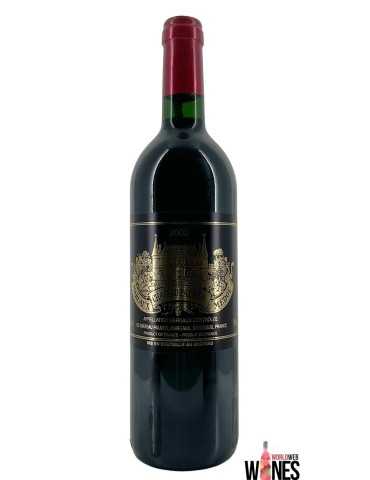
Discover below the bottles from Château Palmer currently available at World Web Wines, selected according to arrivals, vintage quality and the rarity of allocations.
210.00 CHF